
Linux Server IP Important Commands
hostnamectl command
How to change the Hostname
[root@Sharique ~]# hostnamectl status

Once change the hostname need to restart Linux Server.
[root@Sharique ~]# hostnamectl set-hostname qp

So here you can check the hostname has been changed.
[root@qp ~]# hostnamectl status
[root@qp ~]# hostname
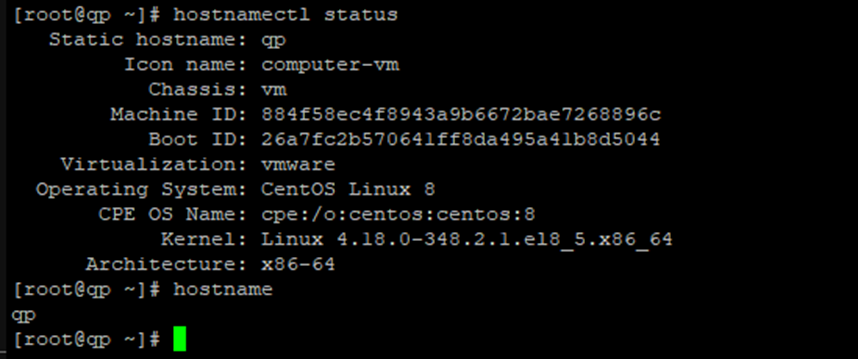
How to change the centos/RedHat Linux etc/hosts and host IP address.
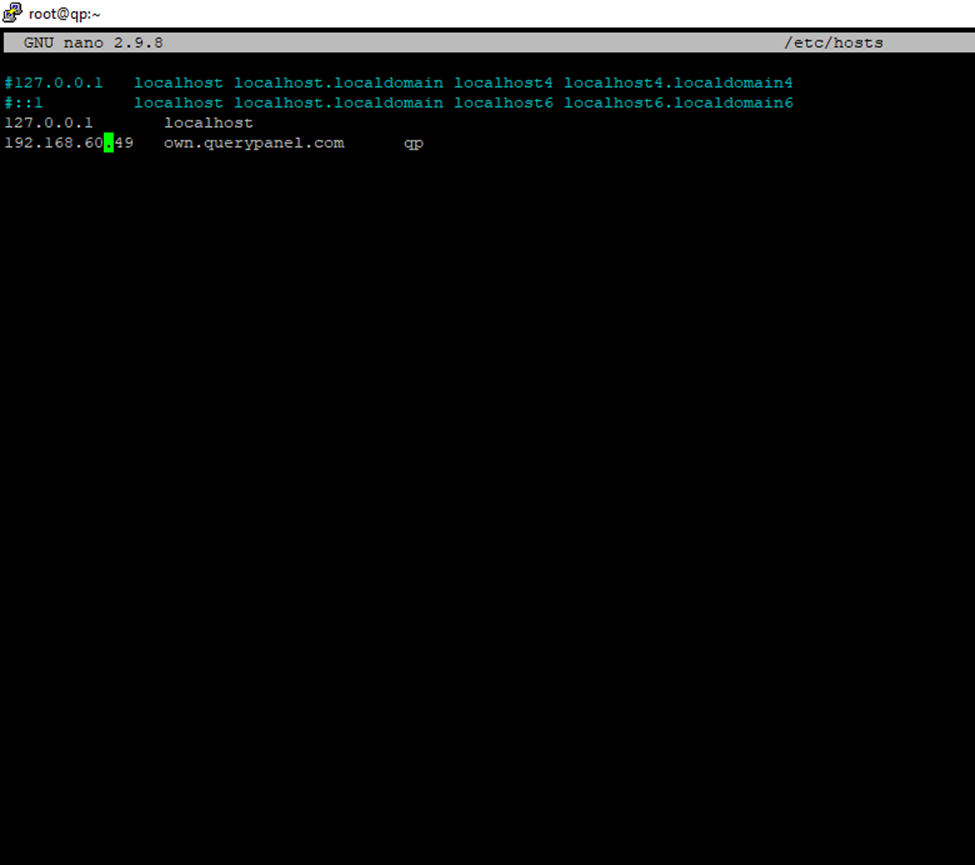
Now here I am using centos-8 if you will check there is only old version or other Linux difference in directory.
Centos/RedHat Linux
/etc/sysconfig/network-scripts/ifcfg-eth0
Ubuntu
/etc/netplan/00-installer-config.yaml
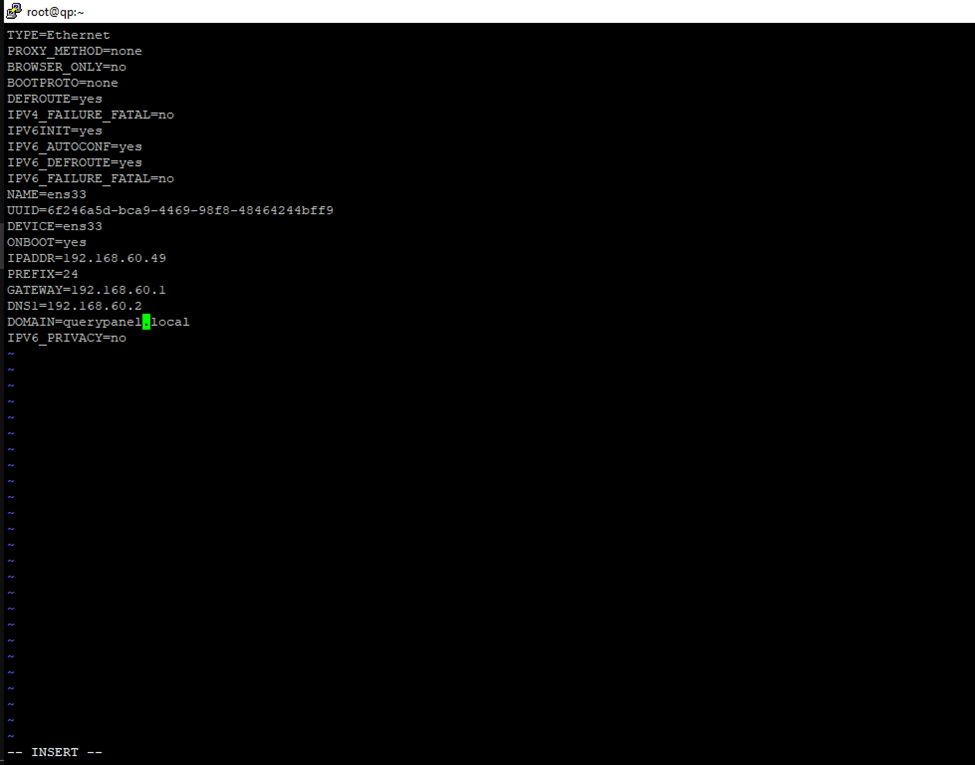
[root@qp ~]# vi /etc/sysconfig/network-scripts/ifcfg-ens33
Or
[root@qp ~]# nano /etc/sysconfig/network-scripts/ifcfg-ens33
TYPE=Ethernet
PROXY_METHOD=none
BROWSER_ONLY=no
BOOTPROTO=none
DEFROUTE=yes
IPV4_FAILURE_FATAL=no
IPV6INIT=yes
IPV6_AUTOCONF=yes
IPV6_DEFROUTE=yes
IPV6_FAILURE_FATAL=no
NAME=ens33P96-98f8-48664244bff9
DEVICE=ens33
ONBOOT=yes
IPADDR=192.168.60.49
PREFIX=24
GATEWAY=192.168.60.1
DNS1=192.168.60.2
DOMAIN=querypanel.local
IPV6_PRIVACY=no
After applying the new IP address need to restart the Network.
systemctl start NetworkManager.service
[root@qp ~]# systemctl stop NetworkManager.service
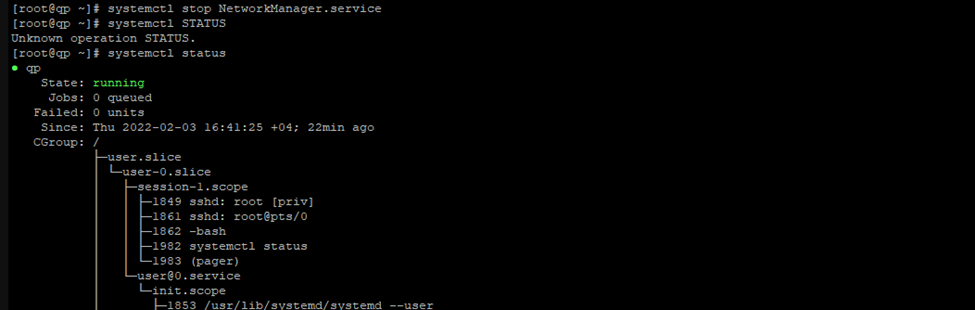
[root@qp ~]# systemctl start NetworkManager.service
[root@qp ~]# systemctl Restart NetworkManager.service

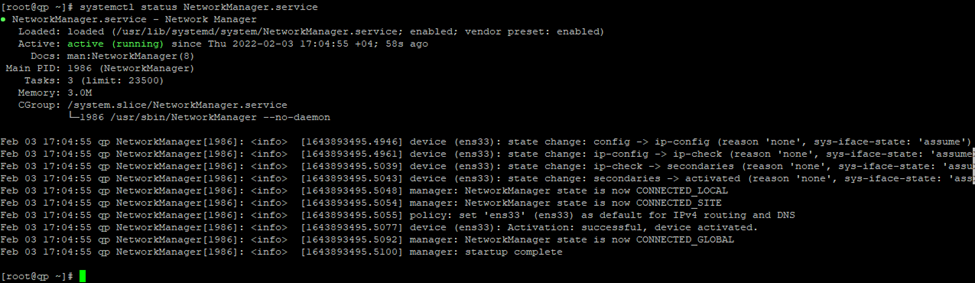
[root@qp ~]# systemctl status NetworkManager.service
Using nmcli Tool
The nmcli is the command-line utility for the managing
NetworkManager on CentOS/RHEL 8 Linux system. You can simply use this utility
to stop/start network service on your CentOS 8 or RHEL 8 system.
WARNING – Do not run nmcli
networking off for the remotely connected systems. This will disable
the NetworkManager network connections on the machine and you will lose
connection.
[root@qp ~]# sudo nmcli networking off
[root@qp ~]# nmcli general status
[root@qp ~]# nmcli networking on

How do we check mysql and Apache Server Running status.
Here: step by steps methods.
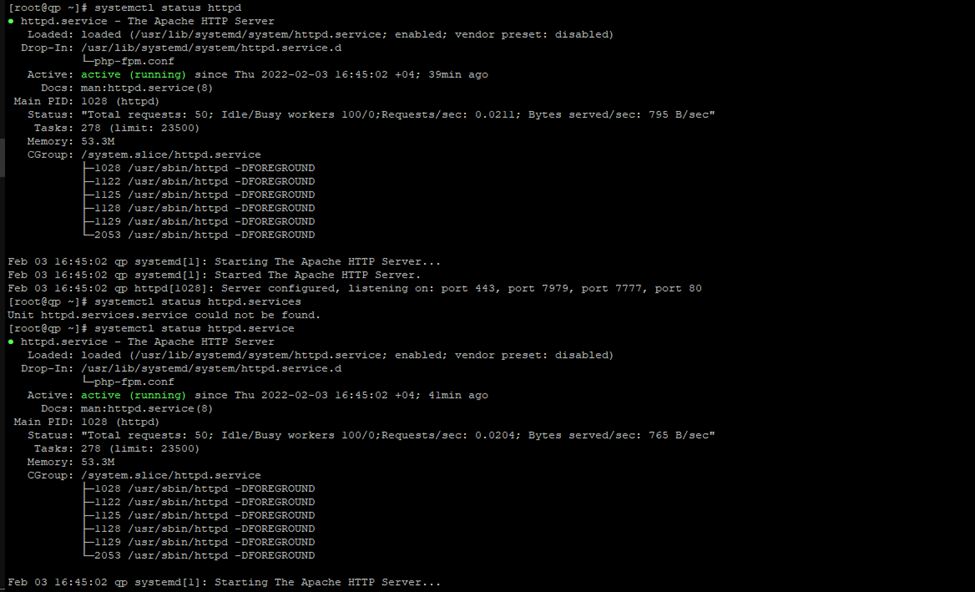
[root@qp ~]# systemctl status httpd
[root@qp ~]# systemctl status httpd.service
[root@qp ~]# systemctl restart httpd
[root@qp ~]# systemctl start httpd
[root@qp ~]# systemctl stop httpd

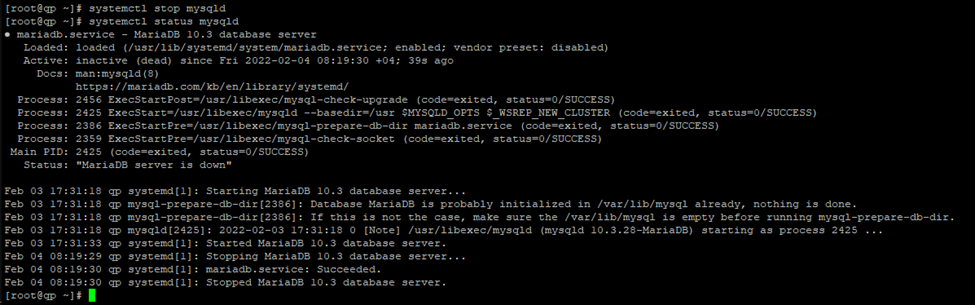
[root@qp ~]# systemctl status mysqld
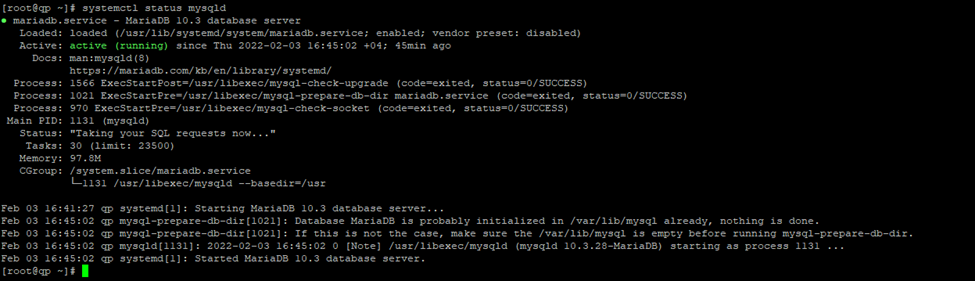
[root@qp ~]# systemctl restart mysqld

| Command | Function |
| man | Display information about all commands |
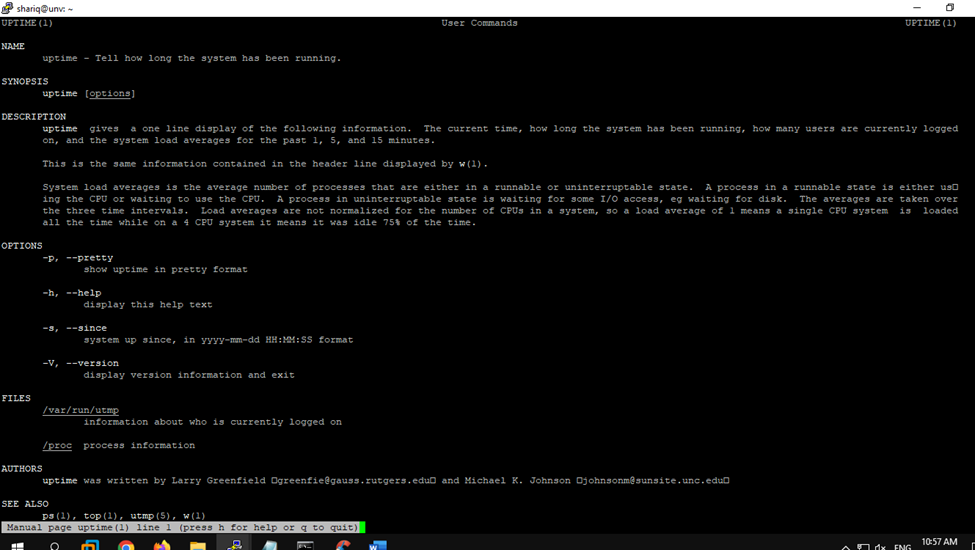
| uptime | Show how long system is running |
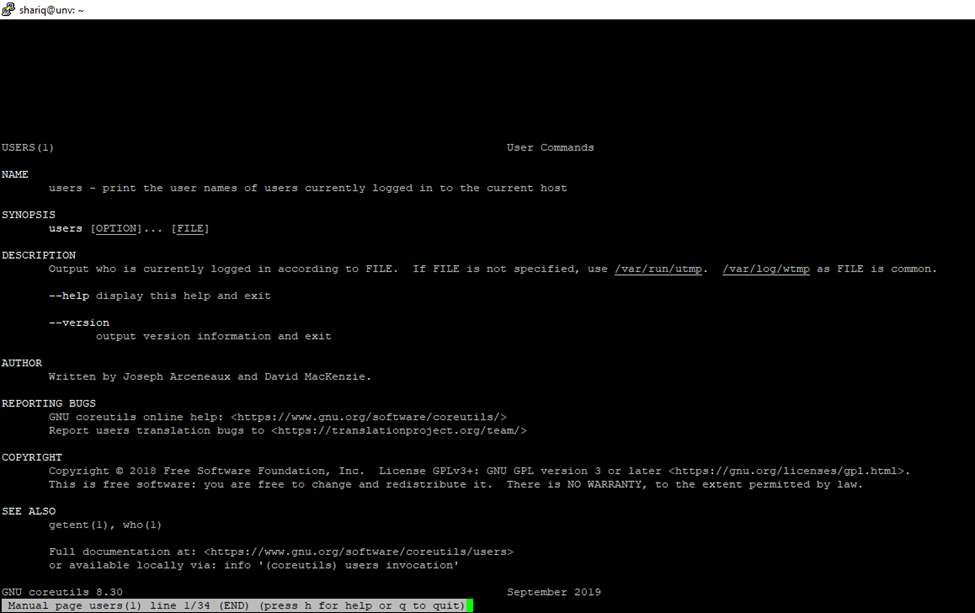
| users | Show username who are currently logged in |
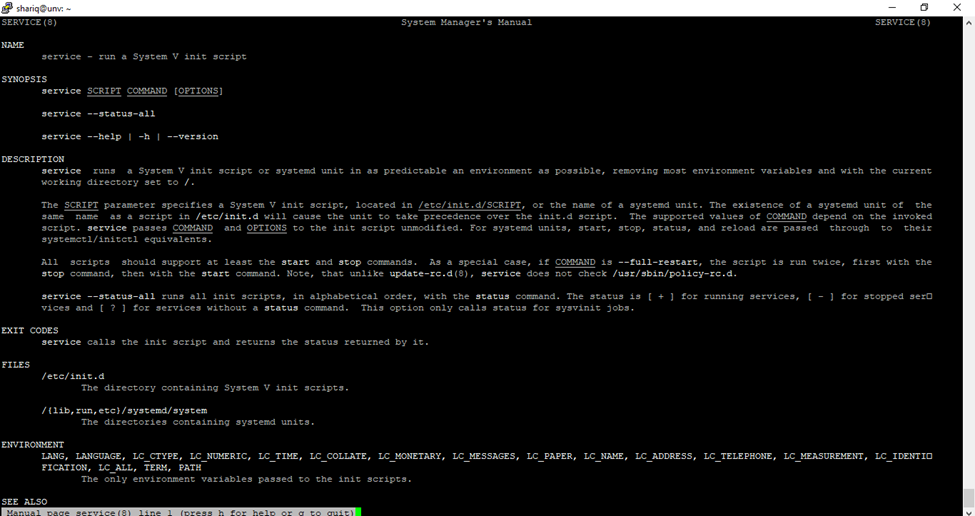
| service | Call and execute script |
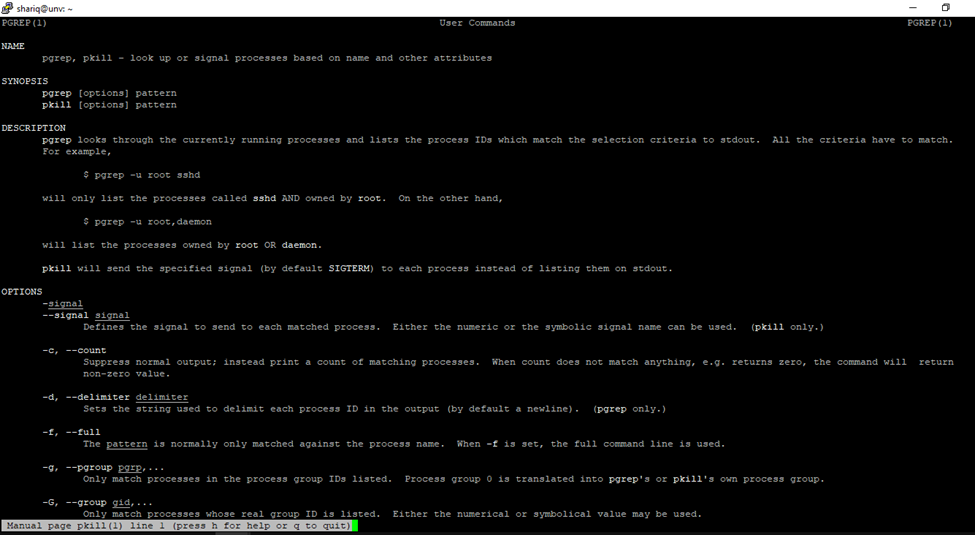
| pkill | Kill a process |
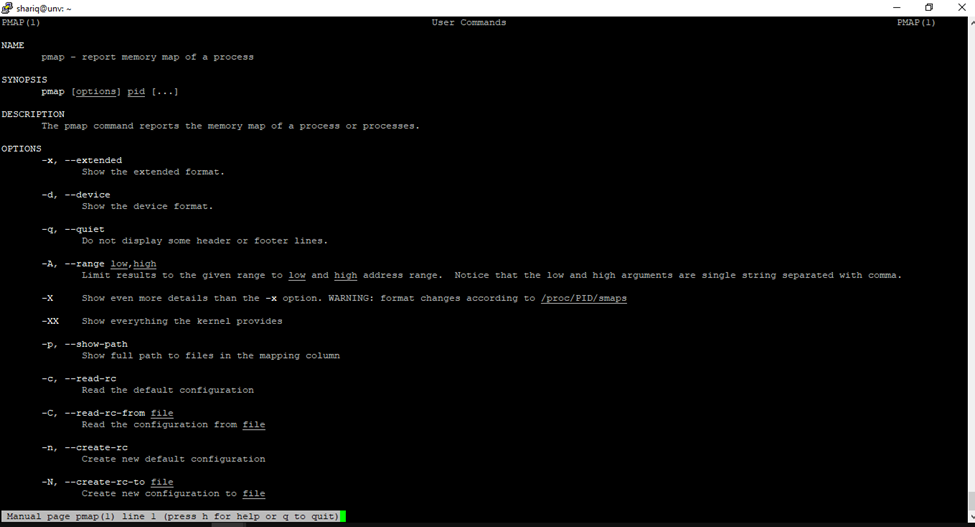
| pmap | Memory map of a process |
| wget | Download file from network |
| ftp or sftp | Connect remote ftp host |
| free | Show memory status |
| top | Display processor activity of system |
| last | Display user’s activity in the system |
| ps | Display about processes running on the system |
| Shutdown commands | Shutdown and reboot system |
| info | Display information about given command |
| env | Display environment variable for currently logged-in user |
| netstat | Display network status |
| arp | Check ethernet connectivity and IP address |
| df | Display filesystem information |
| du | Display usage |
| init | Allow to change server bootup |
| nano | A command line editor |
| nslookup | Check domain name and IP information |
| shred | Delete a file by over writing its content |
| cat | Display, copy or combine text files |
| pwd> | Print path of current working directory |
| locate | Finding files by name on system |
| chown | Change ownership of a file |
| >alias | To short a command |
| echo | Display text |
| cmp | Compare two files byte by byte |
| mount | Mount a filesystem |
| ifconfig | Display configuration |
| traceroute> | Trace existing network |
| sudo | Run a command as a root user |
| route | List routing table for your server |
| ping | Check connection by sending packet test packet |
| find | Find location of files/directories |
| users | Show current logged in user |
| who | Same as w but doesn’t show current process |
| ls | List all the files |
| tar | Compress directories |
| grep | Search for a string in a file |
| su | Switch from one to another user |
| awk | Search lines for a given pattern |
shariq@unv:~$ man uptime
shariq@unv:~$ man users
shariq@unv:~$ man service
shariq@unv:~$ man pkill
shariq@unv:~$ man pmap
Merely wanna remark that you have a very nice website , I love the design it really stands out.